
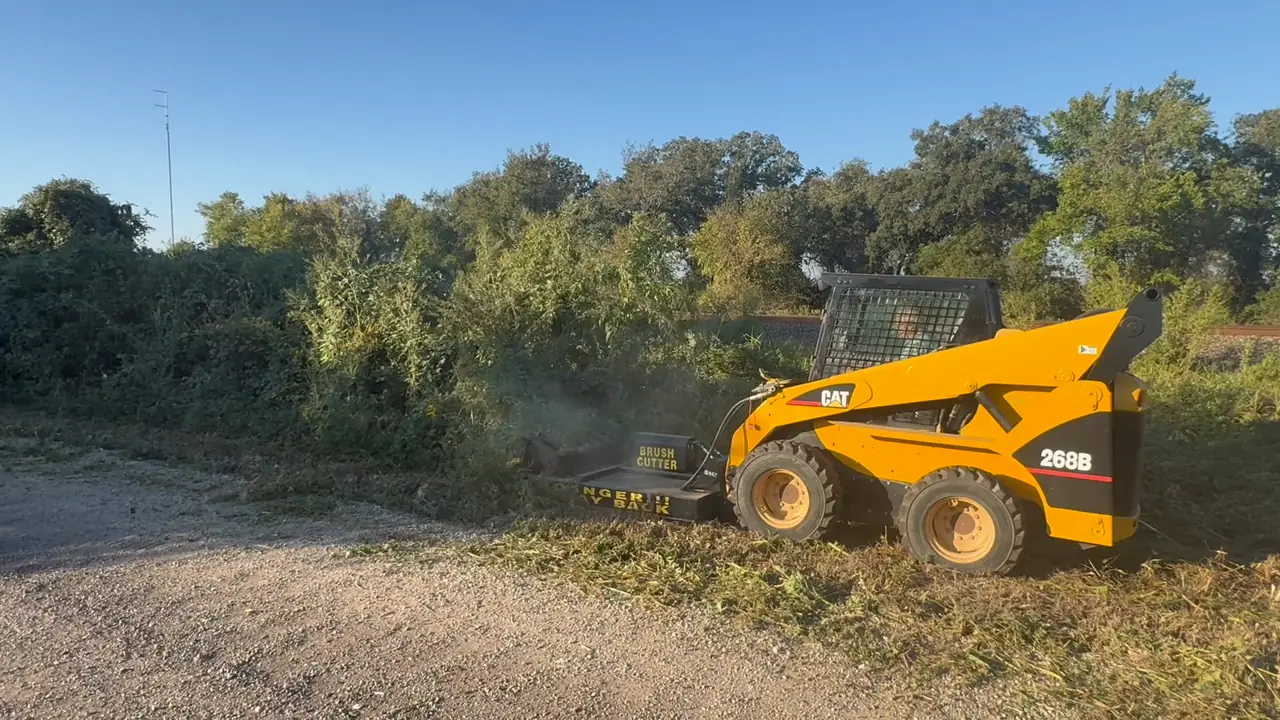
Taking back land the brush has claimed
Leave a pasture alone for a few seasons in Milam or Robertson County and it fills in fast. Cedar seedlings, mesquite sprouts and thick yaupon crowd out grass, choke fence lines and creep onto the edges of drives until a truck can barely get through. Brush like that also holds fuel for wildfire during our dry summers and gives feral hogs and snakes plenty of cover close to the house.
Our skid steer runs a brush mulcher attachment that grinds standing brush and small trees right where they grow. Instead of pushing everything into piles that sit for months waiting on a burn ban to lift, the material is shredded into a layer of mulch that shades the soil, slows erosion and breaks down back into the ground over time.
Clearing with a plan, not just a machine
Before we start, we walk the property with you and talk through what stays and what goes. Many landowners want to keep a few good live oaks or pecans for shade, leave a brushy draw for wildlife, or open up a specific view from the porch. We flag those areas so the finished job looks intentional instead of scraped bare.
Mulching works best on brush and smaller trees. Large hardwoods, heavy stumps or rocky ground may call for a different approach, and we will tell you plainly when that is the case. We also keep an eye on fences, water lines, septic fields and buried utilities so the cleanup does not create a new repair. Clear answers up front save everyone time and money later.
What's included
- Property walk to mark keep and clear areas
- Skid steer brush mulching of cedar, mesquite and yaupon
- Fence line and drive edge clearing
- Mulch left in place to protect the soil
- Care around fences, trees and utilities
- Final pass to tidy edges and access points