Why underpinning matters
The space under a manufactured home holds the plumbing lines, ductwork and insulation that keep the house running. When the skirting is missing, broken or pulled loose, that space is open to wind, rain, skunks, armadillos, stray cats and snakes. Pipes are more likely to freeze during the occasional hard Texas cold snap, and floors stay colder in winter. Good underpinning closes that space off and makes the whole home look finished.
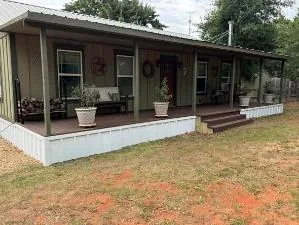
Manufactured homes are common across Milam, Robertson and Burleson Counties, and many of the skirting jobs we see involve older vinyl panels that have cracked in the sun or been knocked out by mowers and storms. The home in the photo shows what new white underpinning looks like when it's installed straight, level and fitted neatly around the porch and steps.
Installed for clay soil and Texas weather
Our clay soils move. When the ground swells after rain and shrinks in drought, skirting that's fastened rigidly at the bottom will buckle or pop out of its track. We install a ground track and top rail that allow for that movement, so panels stay in place through wet and dry seasons. We also leave proper ventilation, which keeps moisture from building up under the home and rotting the floor.
We'll include an access panel where you need one, so you or a plumber can get under the house without tearing out skirting. If the ground slopes, we step or trim the panels to follow the grade. If we notice problems underneath while we work, like a leaking pipe, sagging ductwork or loose insulation, we'll point them out so you can decide what to do next.
What's included
- Removal and haul-off of old or damaged skirting
- Ground track and top rail installation
- Vinyl or other skirting panels cut to fit the grade
- Vents for proper airflow under the home
- Access door for plumbing and utility repairs
- Fitting around porches, steps and decks